
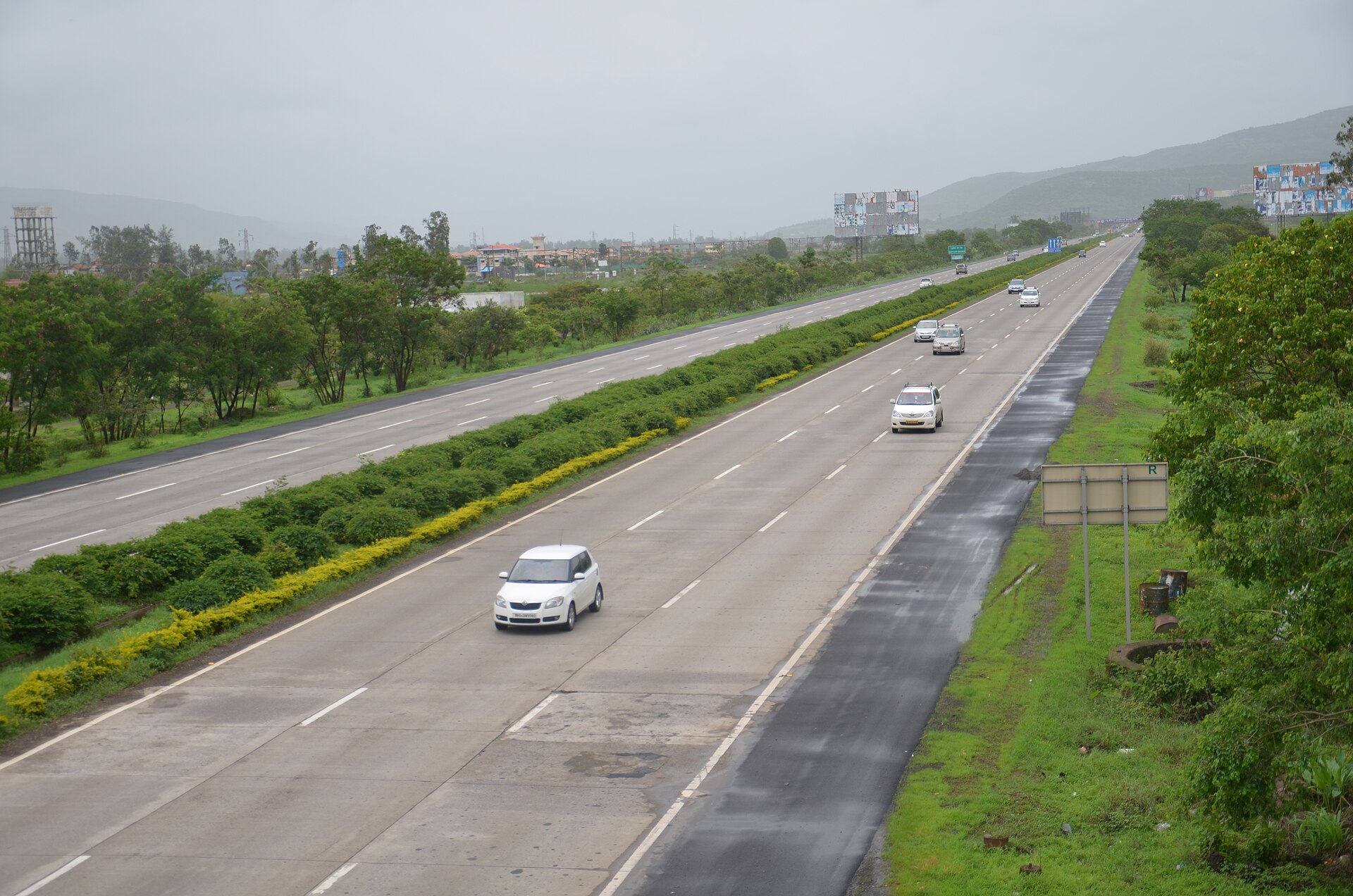
Before you leave, a road trip budget should answer one question: what will this journey actually cost? The answer is more than fuel.
Your total depends on road distance, your vehicle's mileage, fuel prices in the places you pass through, the toll plazas on your exact route, and then food, stays, parking and the odd detour.
This guide gives you the current 2026 figures that matter most, the tolls and FASTag rules. It also says plainly where a number moves, and where nobody can give you a final amount without knowing your entry and exit points. Prices change often, so every figure below carries the date it was checked.
Start with the route, not a national average
Start by drawing the route you expect to drive. Use road distance from your map, not the straight-line distance between two cities. Write down:
- Your starting point and destination
- Every overnight stop
- The expressways you plan to use
- Major detours to places you want to see
- The return route, if it differs from the outward one
- The states where you may refuel
A route through Delhi, Uttar Pradesh and Maharashtra won't have a single fuel rate. Prices vary by state, local taxes, pump and daily revision. Use the price for the place where you expect to buy fuel, not one big-city figure for the whole trip.
Fuel costs: petrol and diesel vary by state
Fuel is usually the largest line in a road trip budget, and it changes most from state to state. The app does the calculation for you, so here we just show what the numbers look like.
See today's fuel prices
The Bharat Brumhmaan app has a Fuel Prices Today screen that shows petrol and diesel by state, with the time of the last update at the top. It covers 36 states and union territories, and the prices are refreshed daily.
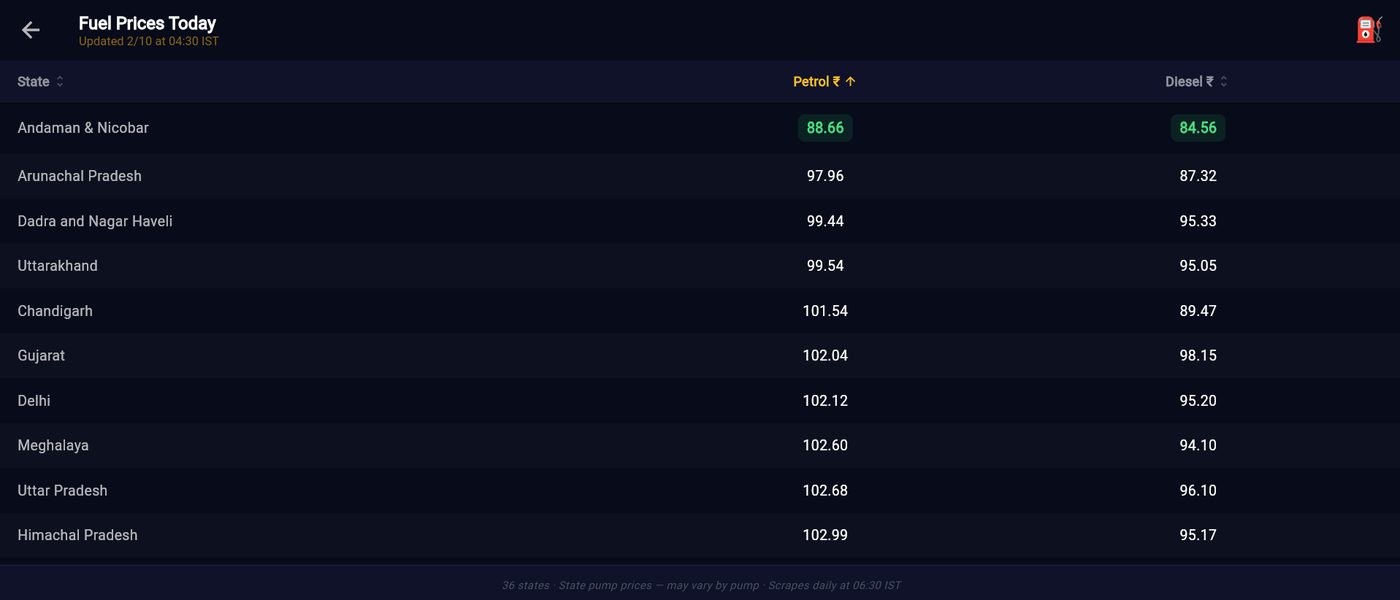
The same screen shows why state-by-state prices matter. On October 2, 2026, petrol was ₹88.66 per litre in Andaman & Nicobar, ₹97.96 in Arunachal Pradesh, ₹99.54 in Uttarakhand, ₹102.04 in Gujarat, ₹102.12 in Delhi, ₹102.68 in Uttar Pradesh and ₹102.99 in Himachal Pradesh. Diesel ranged from ₹84.56 to ₹98.15 across those same rows. These are planning references, not guaranteed prices at every pump, so check again shortly before departure.
Where you fill matters
The app's Smart Fuel Strategy turns that price spread into a fill plan for a specific journey. In its example for a Pune to Gujarat route, it showed petrol at ₹111.21 per litre in Pune and advised filling only 13 litres (48 per cent of the tank) there. It then picked Valsad, Gujarat, 281 km on, as the best price on the route at ₹102.04 per litre, ₹9.2 per litre cheaper, and advised filling the full 27-litre tank there. The estimated saving on that route was about ₹129.
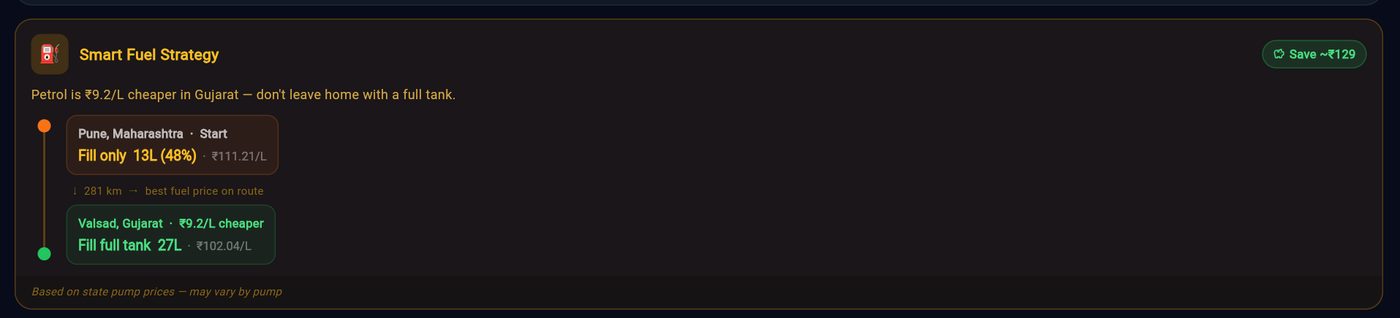
The principle holds for any long drive: buy only what you need in the costlier state and fill up where fuel is cheaper. The saving depends on the actual route, tank size and mileage, so treat the ₹129 as one example, not a promise.
Tolls depend on the road and the section you use
An expressway toll is not automatically one flat fee. It can depend on the road, vehicle category, entry point, exit point and which plazas your trip passes. The table below lists only figures we could confirm against dated sources. For everything else, check the plaza rate for your own entry and exit.
| Expressway | Operator | Car toll | Annual pass applies? | Notes |
|---|---|---|---|---|
| Mumbai–Pune (about 94 km) | MSRDC (state) | ₹320 one way | No. MSRDC is not NHAI | Last revised April 2023; MSRDC reportedly plans no increase until April 2030 |
| Agra–Lucknow | UPEIDA (state) | ₹675 single journey | Check at the plaza | Up from ₹665 on April 1, 2026 |
| Ganga (Meerut–Prayagraj, about 594 km) | UPEIDA (state) | ₹2.55 per km | Check at the plaza | About ₹1,515 end to end; some reports said about ₹1,800 |
| Bengaluru–Mysuru (NH-275, about 119 km) | NHAI | ₹185 single trip | NHAI plazas fall under the scheme | Up from ₹180 on July 21, 2026 |
Three of the rows deserve a sentence each.
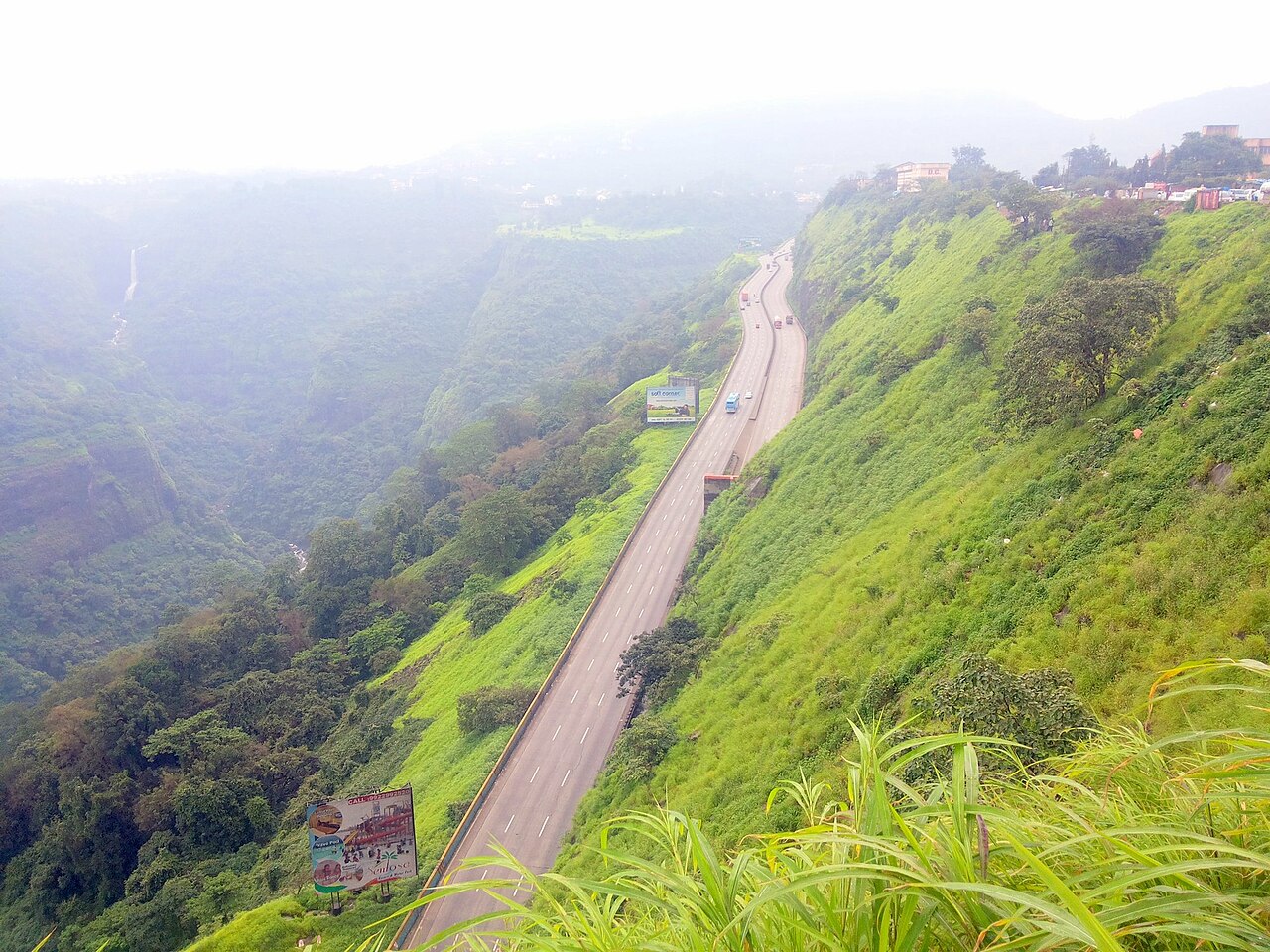
Mumbai–Pune. The Yashwantrao Chavan Expressway is run by the Maharashtra State Road Development Corporation, not NHAI. A fixed toll that hasn't moved on a busy corridor is easy to budget. The old Mumbai–Pune highway is a separate road with its own tolling. Reports also say Maharashtra-registered battery electric vehicles are exempt on the expressway. Confirm that with MSRDC before you rely on it.
Ganga Expressway. UPEIDA's FY 2026–27 car rate is reported at ₹2.55 per km, which is about ₹1,515 for the full one-way 594 km. Some early reports quoted about ₹1,800 for the full trip. If you leave at an intermediate interchange, you should pay less, so work out your own entry and exit rather than quoting the headline figure. Our guide to places to visit on the new expressways covers the route in more detail.
Delhi–Mumbai Expressway (NE-4). There is no single corridor-wide per-kilometre figure that applies to every entry and exit pair, and rates on partly opened stretches have been revised during 2026. Check the plaza rate with NHAI for your own section instead of multiplying a headline number.
Yamuna Expressway: a decision still pending
The Yamuna Expressway runs about 165 km from Greater Noida to Agra. The last increase was in October 2024, when rates rose by about 3.78 per cent. In May 2026 it was reported that the operator had submitted a proposal for a rise of about 3.5 per cent, and that it needed state government approval. We have not found a confirmed full-length figure for the current rate, so we don't print one. Check the plaza before you go.
Other Uttar Pradesh expressways
Purvanchal, Bundelkhand and the Gorakhpur Link are also UPEIDA expressways with distance-based tolls revised from April 1, 2026. Published figures for these differed between reports when we checked, so they aren't in the table. Don't assume the annual pass covers state-run plazas, and look up the current notice for the stretch you will use.
Whatever the road, note your entry point, exit point, vehicle category and any published return or commuter concession. Don't assume the full-expressway toll applies when you are using one section.

FASTag: what the annual pass covers
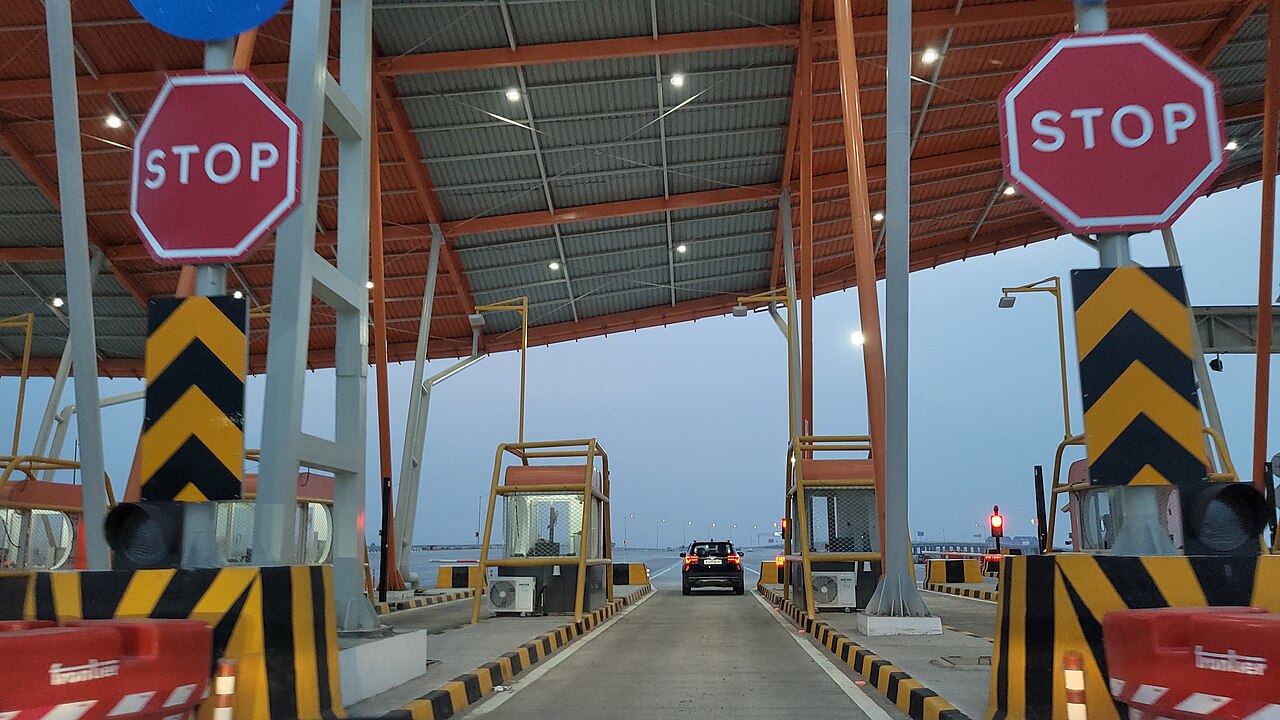
For the 2026–27 financial year, NHAI has set the FASTag Annual Pass fee at ₹3,075. It is valid for 12 months or 200 toll-plaza crossings, whichever comes first, and it applies at NHAI fee plazas on National Highways and National Expressways for eligible private cars, jeeps and vans with a valid FASTag. When the validity or crossing limit runs out, the tag carries on as a normal FASTag at regular toll rates.
The annual pass is not a universal payment for every road in India. State-run expressways such as the MSRDC Mumbai–Pune Expressway are charged separately from your regular FASTag balance.
A working FASTag matters even if you don't buy the pass. Check that it is attached correctly, linked to the right vehicle and has enough balance. If your tag fails, don't assume the usual electronic rate will apply, because a vehicle without a valid tag in a FASTag lane can be charged at a higher rate.
Costs travellers often forget
Fuel and tolls are visible while you plan. The smaller costs are what move the final total.
- Parking. Charges can apply near temples, forts, markets, beaches, viewpoints and hill-station centres. Ask whether the fee is per vehicle, per hour or per day before you leave the car.
- Local and state charges. Some destinations have entry fees, environmental charges, vehicle restrictions or parking permits. These are not consistent across India, so check the official information for each stop.
- Overnight versus day trip. A day trip saves a room but can mean a long return drive and more fuel. An overnight stop adds room and meal costs, but it can reduce fatigue and give you more time at your stops. Don't decide only by comparing hotel price with fuel price. Count the value of rest and safe driving too.
Let the app do the budgeting
You don't need a calculator or a spreadsheet for any of this. The Bharat Brumhmaan app handles the fuel side of a route budget for you: today's state-wise petrol and diesel prices, and a Smart Fuel Strategy that works out where to fill and how much, so you spend less on the same journey.
Use this guide for the parts that change from road to road, the tolls and the FASTag rules. Leave the rest to the app. Heading to Pune? Our one-day Pune guide covers what to do when you arrive.

Budget your route in the app
Check today's state-wise petrol and diesel prices and get a Smart Fuel Strategy plan for your route in the Bharat Brumhmaan app.
Open the app →Sources and dates checked
All checked on October 2, 2026. Toll and fuel figures change, so use these as starting points and confirm at the plaza.
- Bharat Brumhmaan app, Fuel Prices Today and Smart Fuel Strategy screens, October 2, 2026.
- UP expressway toll revisions from April 1, 2026 (india.com)
- Yamuna Expressway toll proposal, May 2026 (India TV News)
- Ganga Expressway toll rates (TollGuru)
- Bengaluru–Mysuru toll revision, July 2026 (Star of Mysore)
- Mumbai–Pune Expressway toll, 2026 (Cabs Pune)
- FASTag annual pass eligible highways and exclusions (Digit)
- FASTag annual pass fee for FY 2026–27 (Economic Times)
Photo credits: hero image Ghateamit, CC BY-SA 3.0; Khandala ghat photo by Gayatri Priyadarshini and toll plaza photo by In Transit, both CC BY-SA 4.0, via Wikimedia Commons. Images were resized and compressed.
